


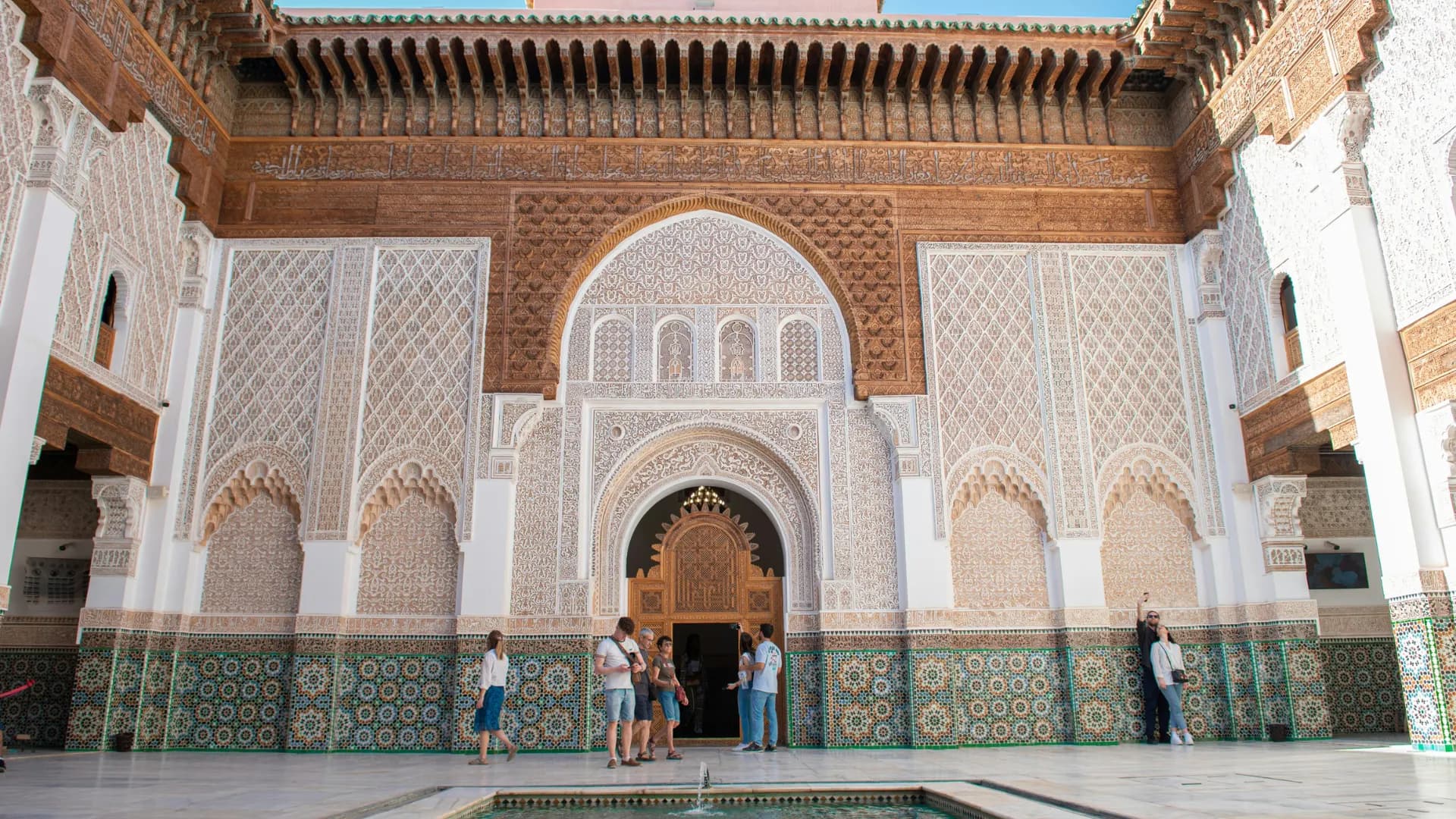
Morocco packs Atlantic beaches, Mediterranean shores, high mountains, imperial cities and the edge of the Sahara into one country. On the same day, you could find a cool sea breeze in Essaouira, fierce heat in Marrakech or snow in the Atlas. Choosing when to travel therefore starts with choosing where you want to go.
When Is the Best Time to Visit Morocco?
Spring and autumn offer the best all-round balance. Days are usually comfortable for walking through the medinas, mountain scenery is rewarding and desert temperatures are far easier than in midsummer. These are also popular seasons, so book accommodation and desert tours early.
What Is the Weather Like in Each Season?
SPRING (MARCH TO MAY): Mild to warm weather, green landscapes in many regions and long days. March can still bring rain and cool nights, while late May can feel hot inland.
SUMMER (JUNE TO AUGUST): Hot and dry inland and in the desert. The Atlantic coast stays noticeably cooler, making it a good choice for beach holidays.
AUTUMN (SEPTEMBER TO NOVEMBER): Heat gradually eases. September can still be very warm, October is often ideal, and rain becomes more likely as November approaches.
WINTER (DECEMBER TO FEBRUARY): Often mild and sunny by day at low altitudes, with cold nights inland. The mountains can see snow, and many buildings have limited heating.
How Does the Weather Differ by Region?
The figures below are approximate long-term average daytime highs and night-time lows. They are for planning only and are not a forecast.
MARRAKECH: About 19°C by day and 6°C at night in January, and about 38°C and 21°C in July.
FES: About 16°C and 4°C in January, and about 35°C and 18°C in July. Read our guide to Fes to plan your visit.
ESSAOUIRA: About 19°C and 11°C in January, and about 22°C and 18°C in July and August. Expect wind.
AGADIR: About 21°C and 8°C in January, and about 26°C and 19°C in July, with occasional spells of intense heat.
TANGIER: About 17°C and 8°C in January, and about 29°C and 19°C in July. Winter is the wetter season.
OUARZAZATE: About 17°C and 2°C in January, and about 39°C and 23°C in July.
What Is the Best Time for the Imperial Cities?
March, April, October and early November are excellent for Marrakech, Fes, Meknes and Rabat. In summer, sightsee early and late in the day, rest during the hottest hours and choose accommodation with air conditioning.
When Should You Visit the Sahara Desert?
Aim for March to April or October to early November. Summer temperatures can exceed 40°C. Winter days are often pleasant for a camel ride, but desert nights can approach or fall below freezing, so pack warm layers and ask how your camp is heated.
When Is the Best Time for the Beaches and Surfing?
June to September is the classic beach season. The Mediterranean coast around Tangier and Al Hoceima is at its best in July and August. On the Atlantic side, expect cool water, morning mist and wind in places. Surfers often favour autumn and winter, when Atlantic swells around Taghazout are stronger.
When Should You Go to the Atlas Mountains?
Late spring to early autumn is generally the most straightforward period for hiking. High-altitude routes in winter require proper equipment, experience and a qualified guide. For snow scenery, consider December to February in Ifrane and the Middle Atlas, remembering that snowfall is never guaranteed.
What Is Morocco Like Month by Month?
JANUARY AND FEBRUARY: Quiet in many places, with cool weather, mountain snow and almond blossom in parts of the south towards February.
MARCH AND APRIL: Excellent for cities, valleys and desert tours.
MAY: Warm and lively, with the rose harvest in the Kelaat M'Gouna area.
JUNE TO AUGUST: Best for the coast and high mountain trails; very hot in Marrakech, Fes and the desert.
SEPTEMBER AND OCTOBER: A strong choice for touring, with warm days and the date harvest in southern oases.
NOVEMBER AND DECEMBER: Cooler, often good value outside holidays, with a greater chance of rain in the north.
Which 2027 Dates Should You Plan Around?
RAMADAN: Expected to run from about 8 February to 9 March 2027. Some cafés and restaurants close during the day and opening hours change, while evenings become lively.
EID AL-FITR: Expected around 10 March 2027. Businesses may close and transport can be busy.
EID AL-ADHA: Expected around 17 May 2027. Plan transport and meals ahead, as many businesses close for the holiday.
GNAOUA FESTIVAL: Scheduled for 24 to 26 June 2027 in Essaouira. Book your stay early.
SOLAR ECLIPSE: A total solar eclipse on 2 August 2027 will be visible from the far north, including Tangier and Tetouan. Expect high demand, and use certified eye protection.
Religious dates depend on moon sighting. Check them closer to your trip and browse upcoming events in Morocco.
When Is the Cheapest Time to Visit Morocco?
Prices are often lower outside the spring and autumn peaks and away from holidays, particularly in parts of winter. Coastal resorts follow a different pattern and can be expensive in summer. Compare hotels for your exact dates and check cancellation terms.
What Should You Pack?
SPRING AND AUTUMN: Light layers, a warm layer for evenings and comfortable walking shoes.
SUMMER: Loose, breathable clothing, a hat, sunglasses, sunscreen and a refillable water bottle.
WINTER: A warm jacket, a waterproof layer, closed shoes and warm sleepwear.
ALL YEAR: Modest clothing that covers shoulders and knees is useful in towns and near religious sites.
What Other Travel Tips Should You Know?
TIME: Morocco returned to GMT on 20 September 2026. Check that your devices and bookings show the correct local time.
DISTANCES: Allow enough time between regions, especially on mountain roads. Avoid trying to see the whole country in a few days.
ENTRY RULES: Check passport and visa requirements for your nationality with official sources before booking.
Looking for ideas? Explore our things to do in Morocco and find places to eat in our cafés and restaurants section.