


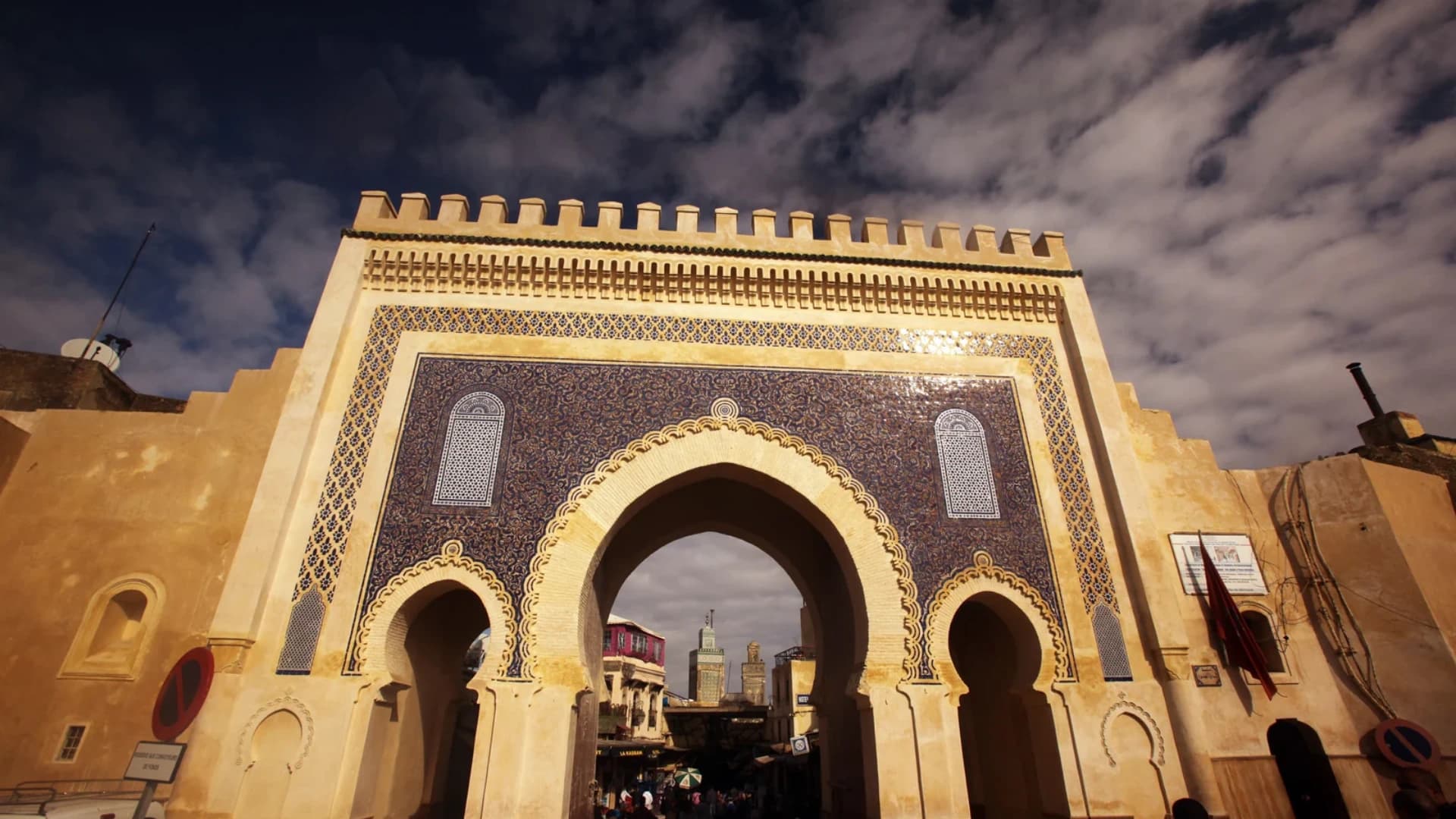
Fes (also spelled Fez) rewards travellers who slow down. Behind its old walls, students, artisans, bakers and shopkeepers go about their day in a maze of lanes shaped over more than a thousand years. Founded under the Idrisid dynasty in the late 8th century, the city reached a golden age under the Marinids in the 13th and 14th centuries and is still regarded as Morocco's spiritual and cultural capital.
Why Is Fes Called the Spiritual Capital of Morocco?
The reputation comes from centuries of religious learning. The Al-Qarawiyyin mosque and university, founded in 859 by Fatima al-Fihri, is widely described as one of the oldest continuously operating universities in the world. Around it grew madrasas, libraries, shrines and mosques that drew scholars from far beyond Morocco. The shrine of Moulay Idris II, closely linked to the city's founding, remains an important place of devotion.
How Is the City Laid Out?
FES EL-BALI: The oldest quarter and the heart of any visit. Most major sights, souks and traditional guesthouses are here.
FES EL-JDID: Built by the Marinids from 1276, this area is home to the Royal Palace gates and the Mellah, the historic Jewish quarter.
VILLE NOUVELLE: The modern city, with wide avenues, cafés, newer hotels and the main railway station.
Fes el-Bali and Fes el-Jdid together form the Medina of Fez, listed as a UNESCO World Heritage Site since 1981.
What Are the Best Things to Do in Fes?
BAB BOU JELOUD: The best-known entrance to the medina, built in 1913. Its tilework is blue on the outside and green on the inside, and it makes a natural starting point for a walk.
BOU INANIA MADRASA: A 14th-century Marinid college famous for its carved cedar, sculpted plaster and zellij tiles. It is one of the few religious buildings in the city that non-Muslims can enter.
AL-ATTARINE MADRASA: Smaller and more intimate, built in the 1320s beside the spice and perfume souk. Its detailed courtyard is a highlight of the medina.
AL-QARAWIYYIN: The mosque is reserved for Muslim worshippers. Other visitors can admire its doorways and glimpse the courtyard from outside.
CHOUARA TANNERY: Watch hides being treated and dyed in stone vats, usually from the terraces of surrounding leather shops. Mornings are a good time to go. The smell is strong, and a tip or purchase may be expected.
NEJJARINE MUSEUM: A beautifully restored merchants' inn displaying wooden arts and crafts, next to one of the medina's most attractive fountains.
AL BATHA MUSEUM OF ISLAMIC ARTS: Housed in the 19th-century Dar Batha palace near Bab Bou Jeloud, the museum reopened in 2025 after restoration. Check its weekly closing day before you go.
SUNSET VIEWPOINTS: Head to the hills near the Marinid Tombs or Borj Nord for a sweeping view over the rooftops and minarets.
How Many Days Do You Need in Fes?
DAY 1: Enter through Bab Bou Jeloud, visit Bou Inania, follow Talaa Kebira into the souks, then see Al-Attarine, the Al-Qarawiyyin area, Nejjarine and the tannery.
DAY 2: Visit the Al Batha Museum, relax in Jnan Sbil Gardens, explore Fes el-Jdid and the Mellah, and finish at a sunset viewpoint.
DAY 3: Take a day trip, or return to the medina for a craft workshop, a cooking class or a traditional hammam.
When Is the Best Time to Visit Fes?
Spring and autumn offer the most comfortable weather for walking. Summer is hot, with typical daytime highs in the low to mid 30s°C and occasional peaks above 40°C. Winter is cooler and wetter, with chilly nights, so pack warm layers and ask whether your accommodation is heated.
The Fes Festival of World Sacred Music is a major cultural date, usually held in late spring or early summer. The 2026 edition took place in June, so check the official 2027 dates before booking.
Ramadan 2027 is expected to begin around 8 February, with Eid al-Fitr around 9 or 10 March, subject to moon sighting. Opening hours often change during this period. You can also browse upcoming events in Morocco.
How Do You Get to Fes?
BY AIR: Fes-Saïss Airport (FEZ) is about 15 km from the city. You can take a taxi or the number 16 bus towards the railway station. Confirm the current taxi fare before setting off.
BY TRAIN: Direct services connect Fes with Meknes in under an hour, Rabat in about three hours and Casablanca in about three and a half to four hours. From Tangier, allow roughly three and a half to four and a half hours, depending on the route. Check current timetables with ONCF, the national railway operator.
How Do You Get Around the Medina?
Walking is the way to explore Fes el-Bali, as cars cannot travel through its narrow lanes. Use Talaa Kebira and Talaa Sghira as your main reference routes, save your accommodation's location offline and step aside for handcarts and mules. A licensed guide is very helpful on your first day. Between the medina and the Ville Nouvelle, small red taxis are the easiest option.
Where Should You Stay in Fes?
A riad, a traditional house built around a courtyard, places you inside the atmosphere of the old city. Choose one near a main gate for easier arrival with luggage. The Ville Nouvelle suits travellers who prefer modern hotels and simple road access. Compare hotels based on location, heating or air conditioning and arrival assistance.
What Should You Eat in Fes?
Fassi cuisine is known for its refinement. Try pastilla, a flaky pie that balances savoury and sweet flavours, along with slow-cooked tagines, harira soup, Friday couscous and honey-coated chebakia. Finish with mint tea, and discover more places to eat in our cafés and restaurants section.
What Should You Buy in Fes?
Look for leather goods, blue-and-white Fassi pottery, hand-hammered brass and copper, woven textiles and carved wood. Compare quality before buying, bargain politely and carry small notes in Moroccan dirhams.
Which Day Trips Can You Take from Fes?
Meknes pairs well with the Roman ruins of Volubilis and the hillside town of Moulay Idriss Zerhoun in one full day. For a change of scenery, visit the old town of Sefrou or head into the Middle Atlas to Ifrane. Find more ideas among our things to do in Morocco.
What Should You Know Before You Go?
DRESS: Modest, comfortable clothing that covers shoulders and knees is a considerate choice, especially near religious sites.
PHOTOS: Ask before photographing people, artisans or their stalls.
MONEY: Carry cash for entry tickets, taxis, tips and small shops. Prices and opening hours can change, so confirm them on site.
GUIDES: Politely decline unsolicited offers to lead you through the medina, and arrange a licensed guide through your accommodation or the tourist office.